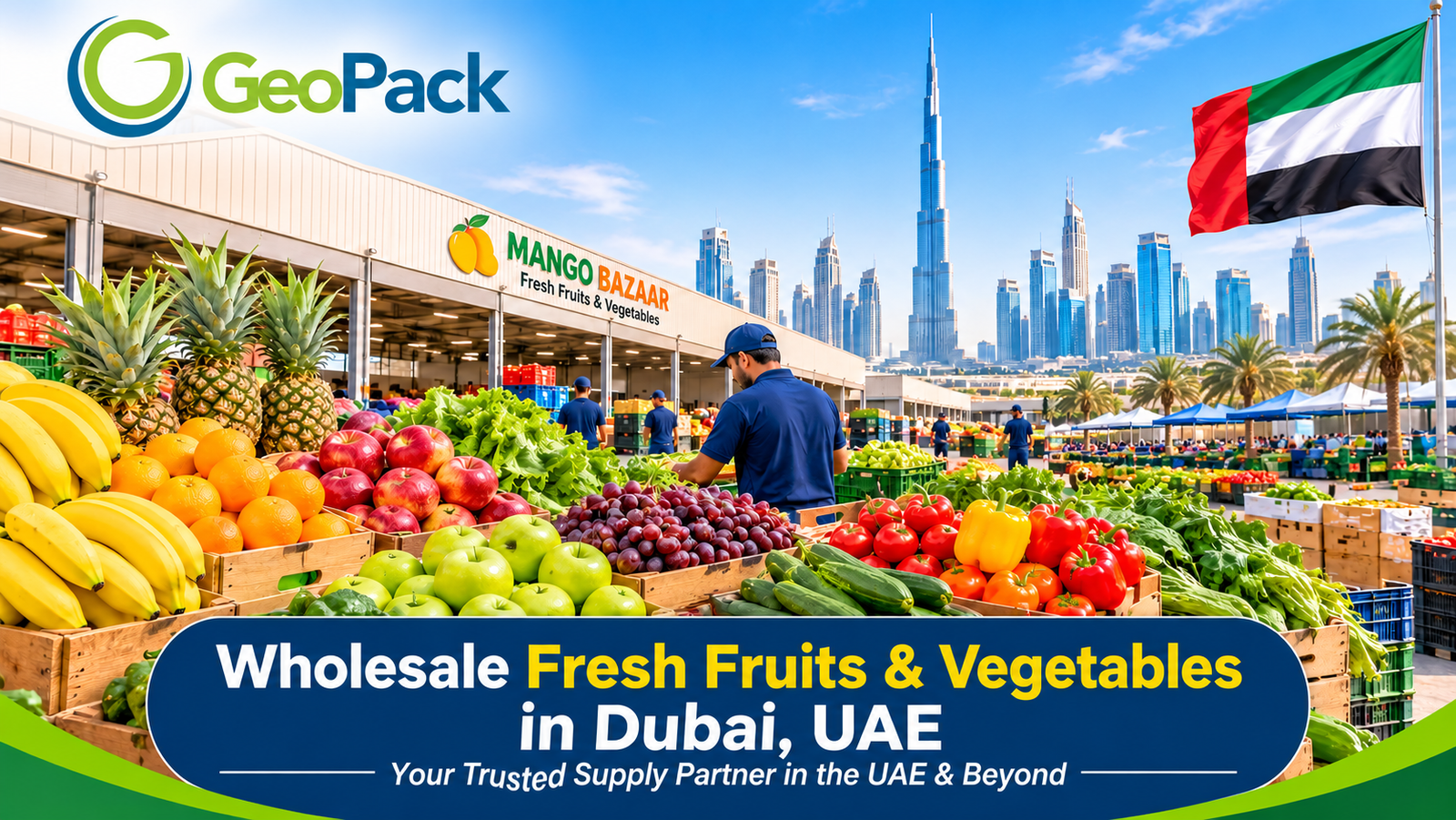
Fresh fruits and vegetables are essential products in the global food supply chain. From supermarkets and grocery stores to restaurants, hotels, catering companies and food-processing facilities, businesses depend on a consistent supply of fresh produce to meet customer demand.
In the United Arab Emirates, particularly Dubai, the demand for fresh fruits and vegetables is supported by a diverse population, a growing hospitality industry, supermarkets, food-service businesses and international food trading. Buyers need access to dependable suppliers who understand wholesale purchasing, product handling, quality expectations, packaging and delivery requirements.
For wholesalers, importers and distributors, selecting the right fresh produce supply partner is an important business decision. Product quality, availability, freshness, pricing, sourcing arrangements and delivery coordination can all influence profitability and customer satisfaction.
GeoPack General Trading LLC, through its fresh produce business Mango Bazaar, aims to serve commercial buyers looking for fresh fruits and vegetables in Dubai, across the UAE and in international markets. The business welcomes enquiries from wholesalers, importers, distributors, supermarkets, retailers, restaurants, hotels and other food-related companies.
Whether you operate a grocery distribution business, manage a supermarket purchasing department, run a restaurant or import fresh produce for wholesale distribution, understanding the fresh produce supply chain can help you make better purchasing decisions.
This guide explores the wholesale fruit and vegetable market, sourcing considerations, product quality, storage, packaging, logistics, supplier selection and business opportunities for commercial buyers.
1. Understanding the Fresh Fruits and Vegetables Wholesale Market
The fresh produce wholesale market connects farms, growers, exporters, importers, distributors, retailers and food-service businesses.
Unlike individual grocery shopping, wholesale purchasing involves commercial quantities, planned orders and ongoing supply arrangements. Buyers may purchase products for resale, food preparation, processing or distribution to other businesses.
Fresh produce wholesalers play an important role in making fruits and vegetables available to different parts of the food industry.
Who purchases fresh fruits and vegetables wholesale?
The wholesale fresh produce market serves a wide range of business customers.
Importers: Companies purchasing fruits and vegetables from international suppliers for distribution in their domestic markets.
Distributors: Businesses supplying fresh produce to supermarkets, grocery stores, restaurants, hotels and smaller retailers.
Supermarkets: Retail chains and independent supermarkets that require regular produce replenishment.
Grocery stores: Local shops and neighbourhood retailers purchasing fruits and vegetables for daily customer demand.
Restaurants: Food businesses requiring fresh ingredients for salads, meals, juices and menu preparation.
Hotels and resorts: Hospitality businesses purchasing produce for kitchens, restaurants, buffets and catering operations.
Catering companies: Businesses supplying meals for corporate events, institutions, private functions and large gatherings.
Food-processing companies: Manufacturers using fruits and vegetables in juices, sauces, frozen products, prepared foods and other applications.
Each customer type has different requirements. A supermarket may focus on appearance, shelf life and packaging, while a restaurant may prioritise freshness, consistent sizing and reliable replenishment.
Understanding these differences helps buyers select suitable products and purchasing arrangements.
2. Why Dubai Is an Important Market for Fresh Produce Trading
Dubai is an established international business and trading centre. Its location, commercial infrastructure, diverse consumer market and connection to regional and global trade make it an important destination for fresh produce businesses.
The UAE’s food market serves residents, visitors, hospitality companies, restaurants, supermarkets, wholesalers and distributors.
Fresh fruits and vegetables are required throughout the year, although product availability, sourcing routes and prices can change depending on seasons and market conditions.
A diverse customer market
Dubai has a wide variety of food businesses serving customers with different preferences and requirements.
These include:
- International supermarket chains.
- Independent grocery stores.
- Fruit and vegetable retailers.
- Restaurants and cafés.
- Hotels and hospitality groups.
- Catering companies.
- Wholesale food markets.
- Food importers and distributors.
- Institutional food suppliers.
This creates opportunities for businesses that can source and supply suitable fresh produce in commercial quantities.
An international trading location
Dubai connects businesses with suppliers, buyers and logistics networks across different regions.
Fresh produce traders may work with products sourced from different agricultural origins depending on season, availability, quality, price and customer demand.
For importers and distributors, a supplier’s understanding of product specifications, packaging, documentation and transport requirements is an important consideration.
Year-round purchasing requirements
Fresh produce is seasonal, but commercial buyers often need products throughout the year.
This makes sourcing plans, alternative origins, inventory management and supplier communication important parts of wholesale purchasing.
Businesses should understand that seasonal availability and pricing can vary, and that a product’s origin should be confirmed for each order rather than assumed to remain the same.
3. Fresh Fruits Wholesale Supply for UAE Businesses
Fruits are an important category in the wholesale food market. They are purchased by supermarkets, grocery stores, restaurants, hotels, juice bars, catering companies and food distributors.
Different fruit varieties serve different customer needs. Some are sold as fresh whole produce, while others are used for juice preparation, desserts, food processing and hospitality services.
Common fruit categories in wholesale trading
The following are examples of commonly traded fruit categories. Actual product availability through Mango Bazaar should be confirmed before ordering.
Tropical fruits
Tropical fruits are popular in retail, hospitality and food-service markets. Examples include:
- Mangoes.
- Bananas.
- Pineapples.
- Papayas.
- Guavas.
- Coconuts.
These fruits are used in fruit displays, fresh juices, smoothies, desserts and food preparation.
Citrus fruits
Citrus products are used in households, restaurants, juice businesses and commercial kitchens.
Examples include:
- Oranges.
- Lemons.
- Limes.
- Mandarins.
- Grapefruits.
Citrus fruits can be purchased for direct retail sales, beverage preparation, cooking and food processing.
Apples and pears
Apples and pears are common products in supermarket and grocery distribution.
Buyers may consider variety, size, appearance, firmness, packaging and intended shelf-life requirements when purchasing these products.
Grapes and berries
Grapes and berries are used in fresh fruit retail, hotel buffets, desserts, fruit platters and speciality food businesses.
These products can require careful temperature management and handling because their storage requirements may differ from those of other fruit categories.
Melons
Watermelons, cantaloupes and other melons are purchased by retailers, restaurants, juice businesses and catering companies.
Commercial buyers should consider size, maturity, condition, packaging and expected selling period.
Fruit supply for different business customers
Different buyers may need different fruit combinations.
A supermarket may require several varieties for its produce section, while a juice bar may prioritise citrus, tropical fruits and melons.
A hotel may need fruits for breakfast buffets, fresh juice preparation and dessert production. A wholesaler may require larger quantities and multiple product categories for resale.
Mango Bazaar welcomes commercial enquiries from buyers who want to discuss their required fruit categories, quantities, packaging and destination.
4. Wholesale Vegetables Supply for Restaurants, Retailers and Distributors
Vegetables are essential ingredients for restaurants, hotels, catering companies, supermarkets and food manufacturers.
They are used in salads, soups, curries, cooked meals, sandwiches, sauces, prepared foods and many other applications.
For commercial buyers, the correct vegetable specification can influence preparation time, kitchen efficiency, product appearance and purchasing costs.
Common vegetable categories in wholesale markets
The following examples represent common commercial vegetable categories. Confirm the current Mango Bazaar product range and availability before publishing specific product offers.
Root vegetables
Root vegetables are widely used in commercial kitchens and retail distribution.
Examples include:
- Potatoes.
- Carrots.
- Onions.
- Garlic.
- Radishes.
- Beetroot.
They are used in everyday cooking, food preparation, salads, side dishes and processed food production.
Leafy vegetables
Leafy vegetables are important for restaurants, hotels, salad businesses and grocery retailers.
Examples include:
- Lettuce.
- Spinach.
- Cabbage.
- Coriander.
- Parsley.
- Mint.
Leafy products often require careful handling and suitable storage to maintain their appearance and freshness.
Tomatoes and cucumbers
Tomatoes and cucumbers are commonly used in salads, sandwiches, sauces and fresh food preparation.
Restaurants, hotels, catering businesses and supermarkets may require regular quantities according to their daily operations.
Peppers and chillies
Bell peppers and chillies are used in a variety of cuisines and food products.
Buyers may need different colours, sizes, varieties and levels of maturity depending on their recipes and customers.
Other commonly traded vegetables
Additional examples include:
- Broccoli.
- Cauliflower.
- Eggplant.
- Zucchini.
- Green beans.
- Okra.
- Pumpkins.
- Mushrooms.
Product specifications and supply arrangements should be agreed with the supplier according to the customer’s requirements.
Vegetable supply for commercial kitchens
Restaurants and hotels often purchase vegetables in quantities based on daily or weekly consumption.
A reliable purchasing arrangement can help kitchens plan menus, control food costs and maintain ingredient availability.
For wholesale buyers, it is useful to communicate preferred sizes, grades, packaging, delivery schedules and any preparation requirements before ordering.
5. The Importance of Freshness and Product Quality
Freshness is one of the most important considerations when purchasing fruits and vegetables.
Unlike many shelf-stable products, fresh produce can change in appearance, texture, ripeness and quality during storage and transportation.
The condition of a product when it arrives can influence how long it remains suitable for sale or use.
Appearance and physical condition
Buyers often assess fresh produce according to:
- Overall appearance.
- Colour and maturity.
- Firmness and texture.
- Size and uniformity.
- Visible damage.
- Signs of decay or spoilage.
- Cleanliness and packaging condition.
Different products have different natural characteristics, so quality standards should be based on the product specification rather than one universal appearance requirement.
Ripeness and maturity
Fruit maturity is important for retail sales, transportation and food preparation.
Some fruits may be purchased at a less mature stage to allow for transportation and ripening before retail sale. Other products may need to arrive closer to their intended consumption stage.
The correct maturity depends on the product, destination, transport duration and buyer’s requirements.
Handling and protection
Fresh fruits and vegetables should be handled carefully to minimise bruising, crushing and unnecessary damage.
Good handling practices include:
- Using suitable packaging.
- Avoiding excessive stacking pressure.
- Keeping products protected during loading.
- Separating products with different storage requirements.
- Maintaining clean handling areas.
- Following appropriate temperature and humidity guidance.
Quality checks before dispatch
Commercial buyers should agree on quality expectations before an order is confirmed.
Where applicable, this may include product grade, size, weight, maturity, packaging, country of origin and acceptable condition at delivery.
Clear specifications help suppliers and buyers understand what is expected and make order inspections more practical.
6. Fresh Produce Sourcing and International Supply Chains
The fresh produce industry relies on agricultural production and international trading networks.
Different fruits and vegetables are grown in different climates and seasons. This means sourcing decisions can change throughout the year.
A wholesale buyer may work with suppliers across multiple origins to meet product demand, manage availability and maintain suitable purchasing options.
Understanding product origin
Country of origin is an important detail for fresh produce buyers.
It can influence:
- Seasonal availability.
- Product varieties.
- Transport arrangements.
- Import requirements.
- Market pricing.
- Customer preferences.
- Traceability and documentation.
Buyers should request accurate origin information for each product and shipment.
Seasonal sourcing
Many fruits and vegetables have specific growing seasons.
Seasonal supply can influence the price, quantity and quality of available products. Weather conditions, harvest cycles, transportation and international market demand can also affect availability.
Commercial businesses should avoid relying on assumptions about year-round availability.
Instead, they should communicate expected monthly demand and ask suppliers about current and upcoming sourcing options.
Multiple sourcing options
Where practical, having access to alternative sourcing origins can help buyers manage seasonal changes and supply interruptions.
However, any alternative product should still meet the buyer’s required variety, grade, quality and import conditions.
Traceability
Traceability helps businesses identify where products originate and how they move through the supply chain.
Depending on the product and applicable regulations, relevant information may include:
- Product name and variety.
- Country of origin.
- Supplier details.
- Batch or lot identification.
- Packing information.
- Harvest or packing information, where applicable.
- Relevant inspection and certification records.
Importers and distributors should maintain suitable records according to their market’s requirements.
7. Wholesale Fresh Produce Supply in Dubai and Across the UAE
Businesses operating in the UAE require fresh produce for a wide range of commercial purposes.
Dubai is home to supermarkets, restaurants, hotels, food distributors, grocery retailers and hospitality businesses that purchase fruits and vegetables regularly.
GeoPack General Trading LLC, through Mango Bazaar, welcomes enquiries from commercial buyers interested in fresh produce supply.
Fresh produce buyers in Dubai
Potential customer groups include:
- Fresh produce wholesalers.
- Fruit and vegetable retailers.
- Supermarket purchasing teams.
- Restaurant owners and purchasing managers.
- Hotel procurement departments.
- Catering companies.
- Food-service distributors.
- Juice bars and beverage businesses.
- Food-processing companies.
Each customer has different purchasing volumes and product requirements.
For example, a restaurant may require a regular selection of vegetables for kitchen operations, while a supermarket may need a broader product range and retail-ready packaging.
UAE markets we aim to serve
GeoPack welcomes business enquiries from customers in:
- Dubai.
- Abu Dhabi.
- Sharjah.
- Ajman.
- Ras Al Khaimah.
- Fujairah.
- Umm Al Quwain.
Supply availability, delivery locations, order quantities and commercial arrangements should be confirmed directly with the GeoPack team.
Why local business communication matters
Working with a supplier that has a Dubai business contact point can make it easier for buyers to discuss their requirements, ask questions and coordinate purchasing arrangements.
Clear communication is especially important when dealing with perishable goods, where delivery schedules and product condition matter.
8. Fresh Fruits and Vegetables for Supermarkets and Grocery Stores
Supermarkets and grocery stores are important buyers in the fresh produce market.
Their customers expect a suitable selection of fruits and vegetables, attractive product displays and regular replenishment.
For retail businesses, the right wholesale supplier can support purchasing plans and help maintain product availability.
Product presentation
Retail presentation can influence customer interest and purchasing decisions.
Supermarkets may consider:
- Product appearance.
- Uniformity of size.
- Packaging.
- Product labelling.
- Country-of-origin information.
- Retail display requirements.
- Expected shelf life.
Products should be handled and displayed according to appropriate food-safety and storage practices.
Managing retail stock
Fresh produce has a limited selling period compared with many packaged grocery products.
Retailers therefore need to plan stock levels carefully.
Over-ordering can increase waste, while under-ordering can lead to empty shelves and lost sales.
Historical sales, seasonal demand, promotional activities and supplier lead times can help retailers plan more effectively.
Bulk purchasing for retailers
Wholesale purchasing can support supermarkets and grocery stores that need regular supplies.
Before placing bulk orders, retail buyers should confirm the required product range, grades, pack sizes, delivery frequency and commercial terms.
Mango Bazaar welcomes enquiries from retail businesses interested in discussing fresh produce purchasing requirements.
9. Supplying Restaurants, Hotels and Catering Companies
Restaurants, hotels and catering businesses depend on fresh ingredients to prepare meals and serve customers.
Fruits and vegetables are used throughout their operations, from breakfast buffets and salads to main courses, desserts, juices and event catering.
Restaurant purchasing requirements
Restaurants may require different produce depending on their cuisine and menu.
A restaurant serving salads may use significant quantities of lettuce, tomatoes, cucumbers and other fresh vegetables.
A juice business may prioritise oranges, lemons, mangoes, bananas and other fruits according to its menu.
Purchasing teams should communicate their expected consumption and preferred product specifications.
Hotel and hospitality supply
Hotels may purchase fruits and vegetables for:
- Breakfast buffets.
- Restaurant kitchens.
- Banquet services.
- Room-service menus.
- Fresh juice stations.
- Dessert preparation.
- Events and conferences.
Large hospitality businesses may need coordinated deliveries and clear product specifications.
Catering businesses
Catering companies often work with changing order volumes based on events, corporate contracts and seasonal demand.
Their produce requirements may increase significantly during busy periods.
Advance planning and communication with suppliers can help catering companies manage purchasing and avoid unnecessary last-minute shortages.
Regular supply discussions
Commercial kitchens may benefit from discussing recurring orders rather than making every purchase independently.
A regular purchasing arrangement can help clarify product requirements, expected quantities, order cut-off times and delivery schedules.
Actual availability and commercial terms should always be agreed before an order is placed.
10. Packaging and Transportation of Fresh Fruits and Vegetables
Packaging and transportation are essential parts of the fresh produce supply chain.
Even high-quality produce can be damaged if it is packed incorrectly, exposed to unsuitable temperatures or handled roughly during transport.
The right packaging depends on the product, destination, transport method, order quantity and customer requirements.
Common packaging considerations
Fresh produce may be supplied using different packaging formats, such as:
- Cartons.
- Plastic crates.
- Ventilated boxes.
- Bags.
- Retail-ready packs.
- Bulk containers.
- Other suitable food-grade packaging.
Not every packaging format is suitable for every product. The packaging should protect the produce while supporting appropriate ventilation, handling and transport.
Temperature management
Different fruits and vegetables have different temperature and humidity requirements.
Some products are sensitive to chilling, while others require refrigerated storage.
A single storage temperature should not be applied to every type of fresh produce.
Businesses should follow product-specific recommendations and use suitable temperature-controlled transport where necessary.
Loading and unloading
Good loading practices can help reduce damage during transportation.
Commercial suppliers and buyers should consider:
- Appropriate stacking.
- Protection from direct sunlight.
- Avoiding unnecessary pressure.
- Separating incompatible products where needed.
- Suitable ventilation.
- Clean loading and unloading areas.
- Efficient handling procedures.
International transportation
For international shipments, transport duration and logistics arrangements must be considered alongside product shelf life.
Importers should discuss shipping routes, transit time, packaging specifications, temperature management, customs clearance and required documentation before confirming orders.
11. Food Safety, Hygiene and Documentation
Fresh fruits and vegetables are food products, so appropriate hygiene, handling and regulatory compliance are essential.
Requirements can vary depending on the product, country of origin, shipment type and destination market.
For wholesalers and importers, documentation and traceability are important parts of responsible purchasing.
Hygiene during handling
Good hygiene practices may include:
- Clean handling equipment.
- Suitable storage facilities.
- Protection against contamination.
- Proper staff hygiene.
- Clean packaging materials.
- Appropriate pest-control measures.
- Suitable transport conditions.
Businesses should follow applicable food-safety procedures and local regulations.
Product inspection
Commercial buyers may inspect produce when receiving a delivery.
Inspection criteria can include:
- Product identity and variety.
- Quantity and weight.
- Size and grade.
- Visible damage.
- Ripeness and maturity.
- Packaging condition.
- Temperature, where relevant.
- Origin and batch information.
Any agreed quality standards should be documented clearly before shipment or delivery.
Documentation for importers
Depending on the destination and product, documentation may include:
- Commercial invoice.
- Packing list.
- Certificate of origin.
- Phytosanitary certificate, where required.
- Relevant inspection certificates.
- Import permits or approvals.
- Transport documentation.
- Product and traceability records.
The exact documents depend on the importing country’s regulations and the nature of the shipment.
Buyers should confirm current requirements with their relevant authorities, customs brokers and regulatory advisers.
12. How to Choose a Reliable Fresh Fruits and Vegetables Supplier
Choosing a fresh produce supplier involves more than comparing prices.
Businesses should evaluate the supplier’s ability to understand product specifications, communicate clearly and support the required purchasing arrangement.
1. Product availability
Ask which fruit and vegetable categories are currently available and whether supply changes according to the season.
Do not assume that every product is available throughout the year.
2. Product quality
Discuss the expected grade, size, maturity, appearance and acceptable condition.
Where possible, agree on measurable specifications before confirming the purchase.
3. Sourcing information
Ask about the country of origin, supplier details and sourcing arrangements.
Accurate origin information is important for purchasing decisions, customer communication and import documentation.
4. Packaging
Confirm the packaging type, quantity per carton or crate, labelling and any special handling requirements.
5. Delivery arrangements
Discuss delivery locations, order cut-off times, expected lead times and transportation conditions.
6. Pricing and commercial terms
A wholesale quotation should clearly identify:
- Product name and variety.
- Origin, where confirmed.
- Grade and size.
- Unit of sale.
- Quantity.
- Packaging.
- Price and currency.
- Delivery or collection arrangements.
- Payment terms.
- Quotation validity.
Fresh produce prices can change with seasonal conditions and market availability, so buyers should confirm prices before placing an order.
7. Communication and reliability
A professional supplier should communicate clearly about availability, order changes, delivery expectations and any product issues.
For recurring business, clear communication helps both parties plan purchasing and supply more effectively.
13. Why Work with GeoPack General Trading LLC and Mango Bazaar?
GeoPack General Trading LLC is a Dubai-based trading company connecting different business activities across fresh produce, natural casings, health and wellness and professional services.
Its fresh fruits and vegetables business operates under the name Mango Bazaar.
Mango Bazaar is intended to serve commercial customers interested in sourcing fresh produce for wholesale, retail, hospitality and food-service requirements.
Dubai-based business presence
GeoPack operates from Al Qusais, Dubai, UAE.
This provides a local business contact point for UAE-based buyers and international companies interested in discussing produce sourcing and trading opportunities.
Commercial buyer focus
GeoPack welcomes enquiries from businesses rather than limiting its focus to individual retail purchases.
Potential customers include wholesalers, importers, distributors, supermarkets, restaurants, hotels, catering companies and food-related businesses.
Fresh produce trading
Through Mango Bazaar, GeoPack focuses on fresh fruits and vegetables.
Product availability, origin, specifications, quantity and packaging should be confirmed according to the customer’s requirements and current sourcing arrangements.
Business-to-business communication
Commercial produce purchasing requires clear specifications and practical coordination.
GeoPack encourages buyers to share their expected quantities, preferred products, delivery destination and purchasing frequency to support a more relevant discussion.
International business opportunities
GeoPack welcomes enquiries from buyers interested in exploring sourcing and distribution opportunities in the UAE and international markets.
Any international supply arrangement remains subject to product availability, destination regulations, logistics and agreed commercial terms.
14. Wholesale and Distribution Opportunities in the Fresh Produce Industry
The fresh produce market offers different business opportunities for companies involved in wholesale, import, export, retail and food service.
However, successful trading depends on understanding the market, managing product quality and developing suitable supplier relationships.
Opportunities for wholesalers
Wholesalers purchase produce in commercial quantities and supply smaller businesses, retailers and food-service customers.
They need to understand local demand, seasonal availability, pricing and product specifications.
Opportunities for importers
Importers source products from international origins and bring them into their target markets.
They must understand destination-country import rules, phytosanitary requirements, customs procedures and transport arrangements.
Opportunities for distributors
Distributors connect suppliers with supermarkets, restaurants, hotels and grocery retailers.
Their business depends on maintaining customer relationships, planning inventory and coordinating suitable deliveries.
Opportunities for supermarkets
Retail businesses can explore sourcing arrangements that meet their product selection, packaging and replenishment requirements.
They should consider the expected selling period and stock rotation when planning purchases.
Opportunities for restaurants and hotels
Hospitality businesses can develop purchasing arrangements based on their menus, customer demand and expected consumption.
Clear communication about product sizes, varieties and delivery frequency can help improve purchasing coordination.
Building long-term supply partnerships
Long-term relationships require more than a low initial price.
Both buyers and suppliers should agree on product specifications, communication methods, order procedures, quality expectations and commercial terms.
GeoPack welcomes discussions with businesses interested in developing professional fresh produce trading relationships through Mango Bazaar.
15. How to Request a Wholesale Fresh Produce Quotation
A detailed enquiry helps suppliers understand the customer’s requirements and prepare a more relevant quotation.
Instead of requesting a general price for all fruits and vegetables, buyers should list the specific products they need.
Information to provide
Company name: The name of your business.
Country and city: Your purchasing or delivery location.
Business type: Importer, wholesaler, distributor, supermarket, restaurant, hotel or retailer.
Required products: List the fruits and vegetables you are interested in purchasing.
Variety and specifications: Provide the preferred variety, size, grade, maturity or other relevant requirements.
Quantity: Specify the required kilograms, cartons, crates or other unit.
Packaging: State your preferred packaging format.
Delivery requirements: Provide the delivery location and expected schedule.
Order frequency: Indicate whether the order is one-time, weekly, monthly or recurring.
Documentation: Mention any required certificates, origin information or import documents.
Example wholesale enquiry
A commercial buyer can use this simple format:
- Company name:
- Country:
- City:
- Business type:
- Required fruit products:
- Required vegetable products:
- Product specifications:
- Required quantity:
- Preferred packaging:
- Delivery destination:
- Order frequency:
- Documentation requirements:
Providing these details can make the quotation process more efficient and help identify suitable products and supply options.
16. Frequently Asked Questions About Wholesale Fruits and Vegetables
Does GeoPack supply fresh fruits and vegetables wholesale in Dubai?
GeoPack General Trading LLC welcomes wholesale and commercial enquiries through its fresh produce business, Mango Bazaar. Product availability, quantities and delivery arrangements should be confirmed directly with the team.
What is Mango Bazaar?
Mango Bazaar is GeoPack’s fresh fruits and vegetables business, focused on commercial produce supply enquiries and business opportunities.
Who can purchase from Mango Bazaar?
Potential customers include wholesalers, importers, distributors, supermarkets, grocery retailers, restaurants, hotels, catering companies and food-processing businesses.
Which fruits and vegetables are available?
Product categories can include tropical fruits, citrus fruits, apples, pears, grapes, melons and common vegetables. Buyers should contact GeoPack to confirm the actual product range and current availability.
Does GeoPack supply supermarkets and grocery stores?
GeoPack welcomes enquiries from supermarkets and grocery businesses interested in discussing fresh produce requirements, product specifications, quantities and purchasing arrangements.
Can restaurants and hotels contact GeoPack?
Yes. Restaurants, hotels and catering businesses can contact GeoPack to discuss the fresh fruits and vegetables required for their kitchens and food-service operations.
Does Mango Bazaar offer bulk orders?
Commercial buyers can enquire about bulk purchasing arrangements. Available quantities, packaging, pricing and order conditions depend on the requested products and sourcing arrangements.
Does GeoPack supply fruits and vegetables across the UAE?
GeoPack welcomes enquiries from businesses across Dubai and other UAE emirates. Delivery locations, availability and arrangements should be confirmed with the team.
Can international importers contact GeoPack?
Yes. International wholesalers, importers and distributors are welcome to enquire about potential supply arrangements. Export availability and destination requirements must be confirmed for each market.
How can I check product origin?
Ask for the country-of-origin information for the specific product and shipment. Buyers should obtain accurate documentation and avoid assuming that the origin remains the same throughout the year.
How are fresh fruits and vegetables stored?
Storage conditions vary by product. Different fruits and vegetables may require different temperature, humidity and ventilation conditions. Follow product-specific storage guidance and avoid applying one temperature to all produce.
What documents may be required for fresh produce imports?
Depending on the product and destination, documents may include a commercial invoice, packing list, certificate of origin, phytosanitary certificate, import permits and relevant inspection records. Buyers should verify the current requirements with destination authorities.
How do I receive a wholesale quotation?
Contact GeoPack with your required products, quantities, specifications, packaging, delivery destination and business details. The team can then discuss available supply options and commercial terms.
Can I discuss regular monthly supply?
Yes. Businesses with recurring demand can contact GeoPack to discuss expected volumes, product selection, order frequency and possible supply arrangements.
Conclusion: Your Fresh Produce Trading Connection in Dubai
Fresh fruits and vegetables play an essential role in the food industry, serving supermarkets, grocery stores, restaurants, hotels, catering companies, wholesalers and distributors.
For commercial buyers, successful purchasing requires careful attention to product quality, seasonal availability, sourcing, packaging, storage, transportation and import documentation.
Choosing a supplier that understands these requirements can help businesses plan their purchasing activities and develop stronger supply relationships.
GeoPack General Trading LLC, through its fresh produce business Mango Bazaar, welcomes commercial enquiries from buyers interested in fresh fruits and vegetables in Dubai, across the UAE and in international markets.
Whether you are a wholesaler looking for fresh produce, an importer exploring sourcing opportunities, a distributor serving retailers or a restaurant purchasing ingredients for daily operations, GeoPack invites you to discuss your business requirements.
Share your required products, quantities, specifications and delivery destination with our team to explore suitable supply options.
Contact GeoPack – Mango Bazaar
GeoPack General Trading LLC
Office 115, First Floor, Sultan Lootah Building, Al Qusais 2, Dubai, UAE
Phone: +971 4 566 1015
WhatsApp: +971 56 715 4787
Email: info@geopack.ae
Website: https://geopack.ae/
Mango Bazaar – Fresh Fruits & Vegetables
Contact GeoPack today to discuss wholesale fresh produce requirements, distribution enquiries and potential business partnerships.